
AI Roleplay App That Stays in Character: How to Find One That Won’t Drift on You
You found the perfect dynamic. The tone was just right, the tension was real, the character felt like an actual person. Then somewhere around message 40, something shifted. The voice softened. The personality flattened. You were still typing to the same app, but it didn’t feel like the same character anymore.
If you’re searching for an AI roleplay app that stays in character, this is the problem you’re trying to solve. Here’s what’s actually causing it, how to test any app before you get attached, and what makes dotdotdot different.
Stop restarting arcs. Start one that actually goes somewhere… dotdotdot is built for long-form character consistency.
Table of Contents
“No Bot Is Themselves Anymore” (And Reddit Has Been Saying It For a While)
There’s a quote from a user in the r/CharacterAI subreddit that kind of says everything: “No bot is themselves anymore and it’s just copy and paste.”
This is one of the most consistent frustrations across every major AI roleplay platform right now. Users report their characters going from sharp, specific, emotionally complex personas to bland version of themselves. Villains turn agreeable. Dark, moody characters become warm and gentle. The bully starts talking like the love interest.
Two requests come up again and again in user discussions: message editing and less personality drift over time. Both point to the same problem. When a conversation starts to slip, there is no way to correct it, and the character gradually loses consistency. These are not isolated complaints. The fact that these patterns show up across Reddit threads, forums, and app reviews suggests this is not isolated feedback but a broader system-level problem.
So what is actually happening? And why does it keep happening on app after app?

What “Staying in Character” Means (It’s Not Just About Memory)
This gets mixed up a lot, so let’s make it clear.
Memory is about what the AI remembers. Did it retain your character’s name? Does it know what happened in the last session? Can it recall a promise made three scenes ago?
Staying in character is about how the AI behaves. Does it react the way this specific character would? Does it hold its personality under pressure? Does the voice stay consistent when the conversation gets emotionally complex?
An AI can have both of these break independently. An app might remember every detail of your story and still have the character feel like a completely different person by message 50. Conversely, a character might feel stable and consistent within one session but forget everything the moment you come back the next day.
What you actually need for real long-form roleplay is both working at the same time. Separately, they each cover half the experience. Together, they’re what makes a relationship feel real.

The Real Reason Why Characters Drift
When you ask an AI company why their characters lose personality over long conversations, the answer is usually vague. But here’s what’s actually happening under the hood.
Large language models are statistical engines. They’re trained on massive amounts of text, and when a conversation gets long, they start averaging toward the mean of that training data rather than holding your specific character definition. The longer the chat runs, the more the model reaches for familiar, safe, generic outputs instead of the specific voice you set up at the start.
This is what the community calls “alignment bias.” Most general-purpose AI models are trained to be agreeable, helpful, and conflict-averse. That’s great for a customer service bot. It’s terrible for a morally grey villain, a brooding love interest who holds grudges, or any character with meaningful emotional complexity.
The result looks like this in practice: a gruff, distant character starts warming up way too quickly; tension you built over multiple sessions gets softened or resolved without your input; the character starts using the same phrases, the same emotional shortcuts, the same sentence rhythms regardless of who they’re supposed to be.
It’s not a glitch. It’s the model defaulting back to what it’s most comfortable generating.
The 4-Part Test: How to Know If an App Will Actually Hold Its Personality
Before you build a 10-session arc on an app, run this test. It will tell you everything you need to know about whether the character will still feel like themselves a week from now.
| Test | What You Do | What Good Looks Like | What Drift Looks Like |
|---|---|---|---|
| The Pressure Test | Introduce emotional tension early. Give the character something to push back against. | Reacts the way this character would. Holds its ground, shows its specific traits. | Goes soft. Becomes agreeable. Loses whatever made it distinct. |
| The Long Haul Test | Push the conversation past 50 messages without recapping or re-prompting. | Voice stays consistent. Personality at message 50 matches message 5. | Tone flattens. Character starts responding like a generic chatbot. |
| The Next Day Test | Close the app. Come back 24 hours later without re-establishing anything. | Picks up the dynamic where you left it. Same energy, same relationship. | Acts like you’ve never met. You have to rebuild from scratch. |
| The Complexity Test | Give the character something morally or emotionally complex to respond to. | Responds with nuance that fits who they are. Handles difficulty without collapsing. | Defaults to safe, generic, feel-good outputs that break the character. |
If an app passes the first two but fails the last two, you’ll have a decent single-session experience but nothing that holds up over time. For AI roleplay that actually goes somewhere, you need all four.
The “Overly Agreeable Fantasy Boyfriend” Problem
There’s a specific failure mode that comes up constantly in AI roleplay communities.
Even apps with detailed character creation tools often produce characters that drift toward an “overly agreeable fantasy” version of whoever they’re supposed to be. You can set up a character with a specific personality, specific flaws, specific emotional edges, and after a few sessions, all of that gets smoothed out. The rough edges disappear. The character becomes warmer, more accommodating, more generic.
This is especially frustrating in romantic roleplay, where emotional complexity is the whole point. A character who always agrees, never pushes back, and has no real personality friction isn’t a love interest. It’s a yes machine. And it gets boring fast.
The apps that avoid this are the ones specifically built around maintaining character identity under pressure, not just generating the most statistically comfortable response.
What dotdotdot Does Differently
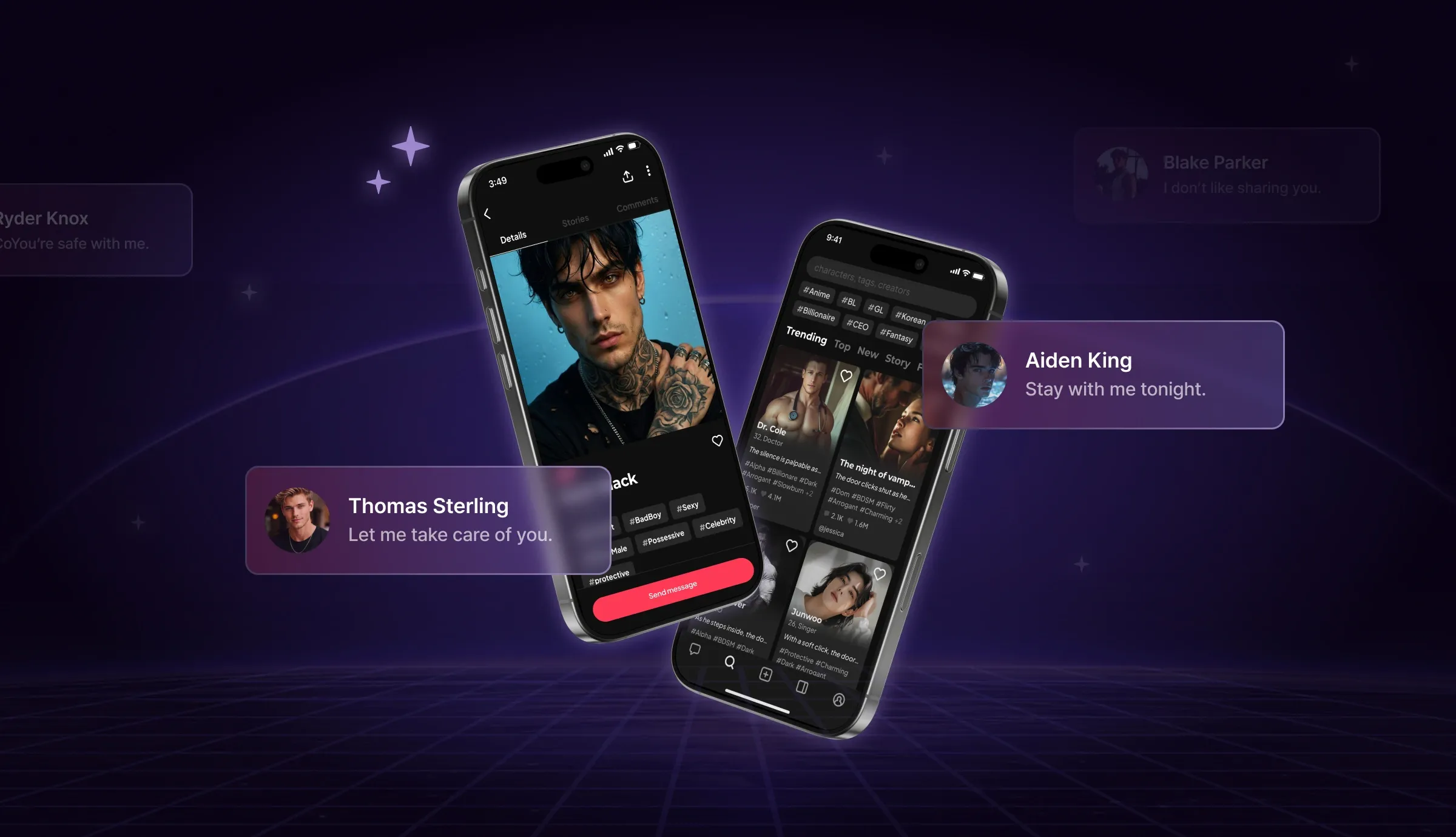
dotdotdot isn’t a general-purpose chatbot with a character skin on top. dotdotdot is an AI roleplay app built specifically for long-form romantic progression, which means character stability is a core design priority, not a feature request on a roadmap.
Here’s what that looks like in practice:
The voice holds. The character you meet in your first scene is the same character you’re talking to after 50 messages. Not softer, not more generic, not a warmer version of themselves.
Emotional pressure doesn’t flatten the personality. When you introduce tension, vulnerability, or conflict, the character responds the way they would, not the way an average AI would. The specific emotional register stays intact.
The relationship tone carries forward. A slow-burn dynamic doesn’t suddenly reset to neutral. A character who was guarded doesn’t become instantly open. The arc you’re building continues building.
Character drift gets resisted, not accommodated. dotdotdot is structured to reinforce character identity rather than letting the model average its way back to generic outputs.
The difference between this and most other apps is the difference between a character who stays themselves and a character who slowly becomes everyone.
Who dotdotdot Is Built For
dotdotdot is the right fit if you care about long-form romantic progression, not just one-off scenes; if you get frustrated when a character’s personality shifts mid-conversation without any reason; if you want a relationship arc that actually develops rather than recycling the same emotional beats; if you’ve tried other apps and found the characters slowly lose what made them interesting; or if you’re switching from a platform where the characters started feeling like strangers.
dotdotdot is not built for people who want quick, casual, disposable chat sessions. dotdotdot is specifically for people invested in building something over time, and who need the character to still feel like themselves when they come back to it.
The character you built deserves to stay who they are.
dotdotdot is built for personality that holds, sessions that continue, and relationships that actually develop over time.
Frequently Asked Questions About Character Drift in AI Roleplay Apps
What is the best AI roleplay app that stays in character?
The best AI roleplay app for staying in character is one built specifically around character stability, not just response quality. The distinction matters because most apps set up a character definition at the start and then let the model drift away from it as the conversation grows longer. Apps that actively reinforce character identity across long sessions and multiple days produce a noticeably different experience from those that rely on the initial prompt alone.
Why do AI roleplay characters change personality mid-conversation?
This is called character drift, and it happens because large language models are trained to produce agreeable, conflict-averse responses. As a conversation grows longer, the model pulls back toward that statistical default rather than holding the specific character definition set up at the start. Rough edges soften. Distinct voices flatten. A brooding or morally complex character gradually becomes warmer and more generic. Apps that actively reinforce character identity rather than just generating the most comfortable response resist this better.
Is staying in character different from having good memory in AI roleplay?
Yes. They are related but separate problems. Memory is about what the AI recalls: names, events, and relational history it can reference. Staying in character is about how the AI behaves: whether it holds its specific personality, voice, and emotional register under pressure. An app can remember every detail of your story and still have the character feel like a different person by message 50. For real long-form roleplay, you need both working at the same time.
How do I test whether an AI roleplay app will drift over time?
Run three tests before committing real time to a platform. First, introduce emotional tension early and see whether the character holds its specific traits or goes soft and agreeable. Second, push the conversation past 50 messages without re-prompting and check whether the voice at message 50 still matches message 5. Third, close the app, come back the next day without recapping, and see whether the character and dynamic are still intact. If the app fails any one of these, it will not hold up over a multi-session arc.
Why do so many AI characters end up feeling the same?
Most AI models pull toward the same statistical center during long conversations, regardless of what character definition was set up at the start. Different characters end up using the same emotional shortcuts, the same sentence rhythms, and the same dramatic beats because the model is defaulting to what it generates most comfortably rather than holding a specific voice. Apps built around active character reinforcement rather than surface-level personality tags produce noticeably more distinct and stable characters over time.
Is dotdotdot just another AI chatbot?
No. dotdotdot is an AI roleplay app built specifically for long-form romantic progression and relationship continuity. It is structured around character stability and cross-session memory as core design priorities, not as features added onto a general-purpose chat interface. The character you meet in your first scene is built to still feel like themselves after 50 messages and multiple sessions, not a softer, more generic version of who they started as.
Does dotdotdot work on Android?
Yes. dotdotdot is available on both iOS and Android and maintains character consistency and cross-session continuity on both platforms, including when the app is backgrounded or closed between sessions.

The character you fell for should still feel like themselves tomorrow.
dotdotdot is built for that. Download and see if they pass the test.