
AI Roleplay Generator: What It Is, What It Can Do, and What Comes After the First Scene
If you searched “AI roleplay generator,” you probably have one of two things in mind.
Maybe you want a tool that spits out a scenario, a setting, a character dynamic you can drop into. Something to get past the blank page and into the story. That is a totally legitimate use case and there are tools built exactly for it.
Or maybe you want something more. You want an AI that does not just generate a starting point but actually stays in it with you. A character that holds their personality. A dynamic that builds over sessions rather than resetting every time. Less “generate a scenario” and more “generate a whole ongoing world.”
This guide covers both. What AI roleplay generators actually do, the different types, what they are genuinely useful for, and what it looks like when the experience goes deeper than a single generated scene.
dotdotdot is built for the story that keeps going. Download and start something that builds…
Table of Contents
What Is an AI Roleplay Generator?
An AI roleplay generator is any tool that uses artificial intelligence to create or facilitate roleplay experiences. But that description covers a wide range of very different things.
On one end, you have standalone prompt or scenario generators. You input a genre, a tone, a character type, and the tool outputs a scene setup, an opening line, or a character backstory. Think of it as a creative assistant for getting started. It generates the raw material and then hands it back to you.
On the other end, you have interactive AI roleplay platforms where the AI itself becomes a character in an ongoing story. You are not generating a prompt to use somewhere else. You are inside the experience, responding in real time to an AI character that generates its half of the story as you go.
Most searches for “AI roleplay generator” are really pointing at something in the middle or closer to the second type. People want a generator in the sense of something that generates the experience, not just the setup for one.
The Different Types of AI Roleplay Generators
Understanding the different types helps you find what actually fits what you are looking for.
Scenario and Prompt Generators
These are tools where you input some parameters and receive a generated scenario, character description, opening scene, or story hook. They are useful for:
- Breaking through creative block when you are not sure what kind of story you want
- Getting a fresh starting point for a roleplay session you are planning with another person
- Generating character concepts for tabletop RPG campaigns or collaborative writing
- Exploring different genres or tones quickly without committing to any of them
The limitation is that the generation stops after the prompt. The tool gives you a spark. What happens next is up to you.
Interactive Story Generators
These are platforms where the AI participates in building the narrative with you in real time. You write a scene, the AI continues it. You make a choice, the AI adapts. The “generation” is ongoing throughout the session rather than happening once at the start.
These are common in text-based interactive fiction, choose-your-own-adventure formats, and open-ended narrative platforms. They are good for people who want to be surprised by where the story goes, who want collaborative storytelling rather than a solo experience.
AI Character and Companion Generators
This is where most people searching “AI roleplay generator” actually land in terms of what they want. These platforms let you interact with AI characters that have defined personalities, backstories, emotional traits, and consistent behavior. The AI generates its responses in character throughout your conversation, rather than just generating a starting scenario.
The key distinction from the previous types: the AI is not just generating text, it is generating a character and sustaining it across an interaction. The quality of this experience depends heavily on how well the platform maintains character consistency and memory.
This is the type that dotdotdot is built around: not a prompt generator, but an AI that generates a character and then actually keeps being that character across sessions.

What Makes a Good AI Roleplay Generator (Beyond the First Scene)
A scenario generator that produces a great opening hook has done its job. The harder question is what happens after that.
For people who want more than a single generated scene, the quality of the experience over time is what separates tools worth using from ones that disappoint after a few sessions. Here is what to look for:
The Character Has to Keep Generating Itself Consistently
An AI that generates a bold, specific character in session one but drifts into something flatter and more generic by session three has not really held up its end. The ongoing generation of a consistent character voice across a long conversation, and across multiple days of sessions, is the hardest thing for most platforms to maintain.
The reason this is hard is because AI models are trained toward agreeable, helpful outputs. Over time, the model pulls toward that default rather than sustaining the particular character identity that was set up. Platforms that actively reinforce character identity resist this better than those that rely on the initial prompt alone.

Memory Has to Generate Continuity, Not Just Store Logs
There is a difference between an app that stores your conversation history and one that uses that history to generate responses that feel continuous. The first gives you a record. The second gives you a relationship.
When memory actually works in a roleplay context, you feel it in specific ways. The character references something from two sessions ago without being prompted. The dynamic you built last week is still present this week. The emotional register of the relationship has context underneath it rather than starting fresh every time.
The Writing Has to Generate Specificity, Not Templates
One of the clearest signs that a roleplay generator is not working well is when every character starts to sound the same. The same sentence rhythms, the same emotional shortcuts, the same way of expressing tension or warmth. This is what happens when the generation is pulling from generic training patterns rather than from a specific, well-defined character identity.
Good AI roleplay writing is specific. It generates dialogue that could only come from this character in this scene, not dialogue that could come from any character in any situation.
What to Do With a Great Scenario Generator (And Where to Take It After)
If you are using a prompt or scenario generator to get started, here are a few ways to get the most out of it before you move into a full interactive experience:
Be specific about the dynamic, not just the setting. “Fantasy world” is a setting. “A former soldier who doesn’t trust anyone trying to navigate a court full of people who are very good at lying” is a dynamic. The more specific the relationship and emotional context in the generated scenario, the more you have to work with.
Generate the conflict before the character. The most interesting roleplay scenarios are built around tension. What does this character want? What is standing in the way? What are they afraid to admit? A scenario built around those questions generates more interesting ongoing content than one built around setting details.
Use the generated scenario as a launching point, not a script. The best thing a scenario generator gives you is a direction. Where the story goes from there should be responsive, surprising, and shaped by the actual interaction rather than the initial output.
And once you have a scenario worth building on, the experience is only as good as the AI character sustaining it.
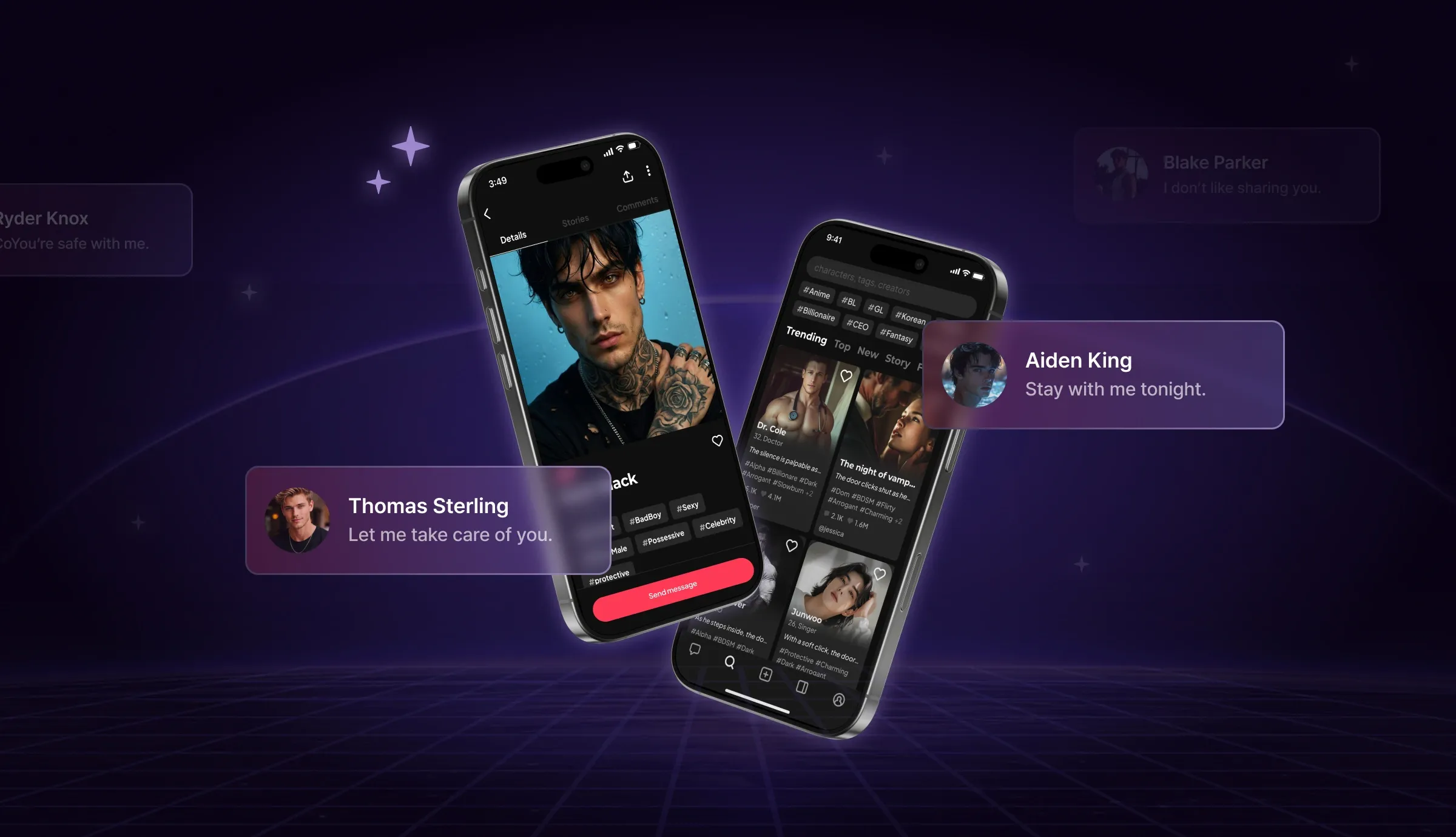
What dotdotdot Generates (And Keeps Generating)
What dotdotdot generates is a character, and then keeps generating that character consistently across every scene, every session, and every return visit.
For AI roleplay specifically built around romantic progression and long-form character dynamics, what gets generated matters less than whether it keeps going. Anyone can generate a compelling opening scene. The question is whether the AI is still generating the same character with the same depth and specificity at session fifteen.
Here is what that looks like in practice with dotdotdot:
Consistent character generation, not just character setup. The personality, voice, and emotional register that get established in your first session are the same ones being generated in your tenth. The character does not drift toward something safer or more generic as the conversation gets longer.
Continuity that generates naturally, not mechanically. When past context shows up in a dotdotdot conversation, it does not feel like the AI reciting stored data. It feels like a character who actually remembers, which is what good relational continuity looks like in practice.
Emotional complexity that does not get smoothed out. Tension stays tense. Unresolved dynamics stay unresolved until they genuinely develop. The AI generates responses that match the actual emotional state of the scene rather than defaulting to warm and agreeable.
A story that generates itself across sessions. You do not have to re-establish the scenario every time you open the app. The context, the relationship, the arc you have been building: all of it is part of what gets generated in the next session.
The best AI roleplay generator is one that never stops generating.
dotdotdot keeps the story going across every session. Download and start something that builds.
Frequently Asked Questions About AI Roleplay Generators
What is an AI roleplay generator?
An AI roleplay generator is any tool that uses artificial intelligence to create or facilitate roleplay experiences. This ranges from standalone tools that generate prompts, scenarios, and character descriptions, to interactive platforms where the AI participates as a character in an ongoing story. The term covers a wide spectrum, but most people searching for it are looking for something interactive rather than just a prompt output.
What is the difference between a roleplay prompt generator and an interactive AI roleplay platform?
A prompt generator produces a scenario, opening scene, or character concept that you then use elsewhere. It generates the starting material and hands it back to you. An interactive AI roleplay platform is one where the AI itself becomes a participant in the story, generating its responses in character throughout the experience. The generation is ongoing rather than happening once at the beginning.
How do I use an AI scenario generator effectively?
Focus on generating the dynamic and the conflict rather than just the setting. Specific emotional context, what the character wants, what is standing in the way, what they are afraid to admit, gives you more to work with than a detailed setting description. Treat the generated scenario as a direction rather than a script, and let the actual interaction take it somewhere unexpected.
Why do AI roleplay characters drift over time?
Most AI models are trained toward agreeable, conflict-averse responses. Over the course of a long conversation, the model pulls back toward that default regardless of how the character was defined at the start. Platforms that actively reinforce character identity throughout the interaction resist this better than those that rely entirely on the initial setup prompt.
What should a good AI roleplay generator maintain over time?
The three things that matter most over time are character consistency, cross-session memory, and writing specificity. A platform that generates a great opening but loses the character’s specific voice by session three, or forgets the dynamic entirely when you come back the next day, is not sustaining the experience. It is just generating a good first impression.
Is dotdotdot a roleplay scenario generator?
Not in the traditional sense. dotdotdot does not produce prompts or scenario templates for you to use elsewhere. It is an AI roleplay platform built for long-form romantic progression, where the AI generates a character and sustains that character with consistency and memory across sessions. If you want a prompt to spark ideas, there are dedicated tools for that. If you want a character that keeps showing up as themselves every time you open the app, dotdotdot is built for that.
Does dotdotdot work on Android?
Yes. dotdotdot is available on both iOS and Android. Cross-session continuity is maintained on both platforms, including when the app is closed or backgrounded between sessions.
A great AI roleplay generator keeps generating.
Session after session. Character after character. dotdotdot is built for the long game. Download and start.