
AI Roleplay App With Good Memory: How to Stop the Resets For Good
You built something. A story, a vibe, a whole dynamic. And then your app forgot all of it. If you’re searching for an AI roleplay app with good memory here’s what to look for, what’s causing the resets, and where to go next.
dotdotdot is built for continuity. Start a story today. Pick it back up tomorrow…
Table of Contents
The “Goldfish Memory” Problem Is Real (And You’re Not Imagining It)
You’re deep into a slow-burn romance arc. Your AI companion knows your character’s name, the tension you’ve been building for three sessions, the nickname they gave you in week one. You close the app. You come back the next day.
And they have absolutely no idea who you are.
This isn’t a you problem. It’s one of the most complained-about issues across every major AI roleplay platform right now. Reddit threads, subreddit reviews, app store ratings—the word “forget” shows up constantly.
Across Reddit discussions and user feedback threads, one issue comes up more than anything else: better memory. People aren’t just mildly annoyed. They feel like their emotional investment gets erased every time the session ends.
So what actually makes an AI roleplay app good at memory? And what’s causing it to fail in the first place? Let’s get into it.
What “Good Memory” Actually Means in AI Roleplay (It’s More Than Just Recall)
When most people say they want an AI roleplay app with good memory, they’re thinking about one thing: “I don’t want to start over.”
But in practice, real memory in AI roleplay has a few different layers, and each one can break independently.
1. Short-Term Continuity
The AI remembers what happened earlier in the same conversation. Your character’s name, the setup you established at the start of the scene, the emotional tone you’ve built.
2. Mid-Session Stability
As the conversation gets longer, the character doesn’t start contradicting itself. It doesn’t suddenly forget that you’re in a mountain cabin when you were just there two messages ago.
3. Cross-Session Persistence
You close the app. You come back the next day, or next week. The relationship dynamic still exists. The AI picks up where you left off instead of greeting you like a stranger.
4. Relationship Memory
The emotional milestones, a fight you resolved, a nickname that stuck, a secret they told you, those carry forward and actively shape how the character interacts with you going forward.
Most apps actually handle layer 1 fine. It’s layers 3 and 4 where things fall apart. And that’s exactly when immersion dies: not at the start of a session, but when you try to come back to something you care about.
Why Do AI Roleplay Apps Keep Forgetting? (The Honest Explanation)
Without getting too deep into LLM architecture: every AI model has a context window. Basically, the amount of conversation it can “see” at once. Once a chat grows beyond that window, older content either gets cut off or compressed into a rough summary.
Here’s the frustrating part: the app might technically store old conversations. But storing isn’t the same as remembering. If the emotional nuance, character dynamics, and relational history from three sessions ago has been flattened into a two-sentence summary, the AI can’t actually use it the way a person would.
That’s why you get experiences like:
Vanishing backstory. Your character’s history disappears after a few sessions.
Repeated questions. The AI asks questions it already “knows” the answer to.
Personality shifts. Mid-conversation character changes that feel completely out of nowhere.
Relationship resets. Going from a slow-burn romance to total strangers in the span of one reply.
The issue isn’t that AI is bad at roleplay. It’s that most roleplay apps weren’t built to prioritize relational memory: the kind of continuity that makes emotional investment feel worth it.

The Quick Test: Does Your App Actually Have Good Memory?
If you’re trying to evaluate an AI roleplay app right now, here’s the fastest way to stress-test its memory before you get emotionally invested in a story that’s about to get reset on you.
| Test | What You Do | ✅ Pass | ❌ Fail |
|---|---|---|---|
| The Little Detail Test | Drop a small, specific detail early in the conversation (e.g., a nickname or a shared memory). Bring it up naturally later. | Remembers it without being prompted. References it naturally. | Ignores it, changes it, or acts like you never mentioned it. |
| The Comeback Test | Close the app. Come back the next day and start a new message without recapping anything. | Picks up the emotional thread. Knows who you are and where you left off. | Greets you like a first-time user. You have to re-explain everything. |
| The Relationship Boundary Test | Establish a dynamic, a boundary, or a relationship milestone. Return after some time. | The dynamic continues naturally. It didn’t reset to neutral. | Back to square one. You have to re-establish the whole vibe. |
| The Personality Drift Test | Add tension or an emotional shift to the scene. See if the character holds its core traits through it. | Personality stays stable even through difficult scenes. | The character becomes generic or changes who they are mid-scene. |
If an app fails more than one of these, long-term immersion won’t last. Period.
Memory vs. Character Consistency: They’re Not the Same Thing
Here’s something that often gets conflated: memory and consistency are related but separate problems.
An app can have decent memory but still have a character that drifts: shifting tone, forgetting personality traits, or starting to feel like a different AI entirely as the conversation gets longer.
And an app can stay “in character” for one session but have zero cross-session persistence, so every time you return, the relationship dynamic resets to zero.
What you actually need is both:
Persistent memory. Your story and relationship history carry forward.
Stable personality. The character stays who they are across emotional scenes and long conversations.
Coherent emotional progression. The relationship evolves based on what actually happened, not a vague summary of it.
The apps that nail all three are rare. Most platforms optimize for one at the expense of the others. That’s why so many roleplayers end up hopping between apps and chasing the combination that actually works.
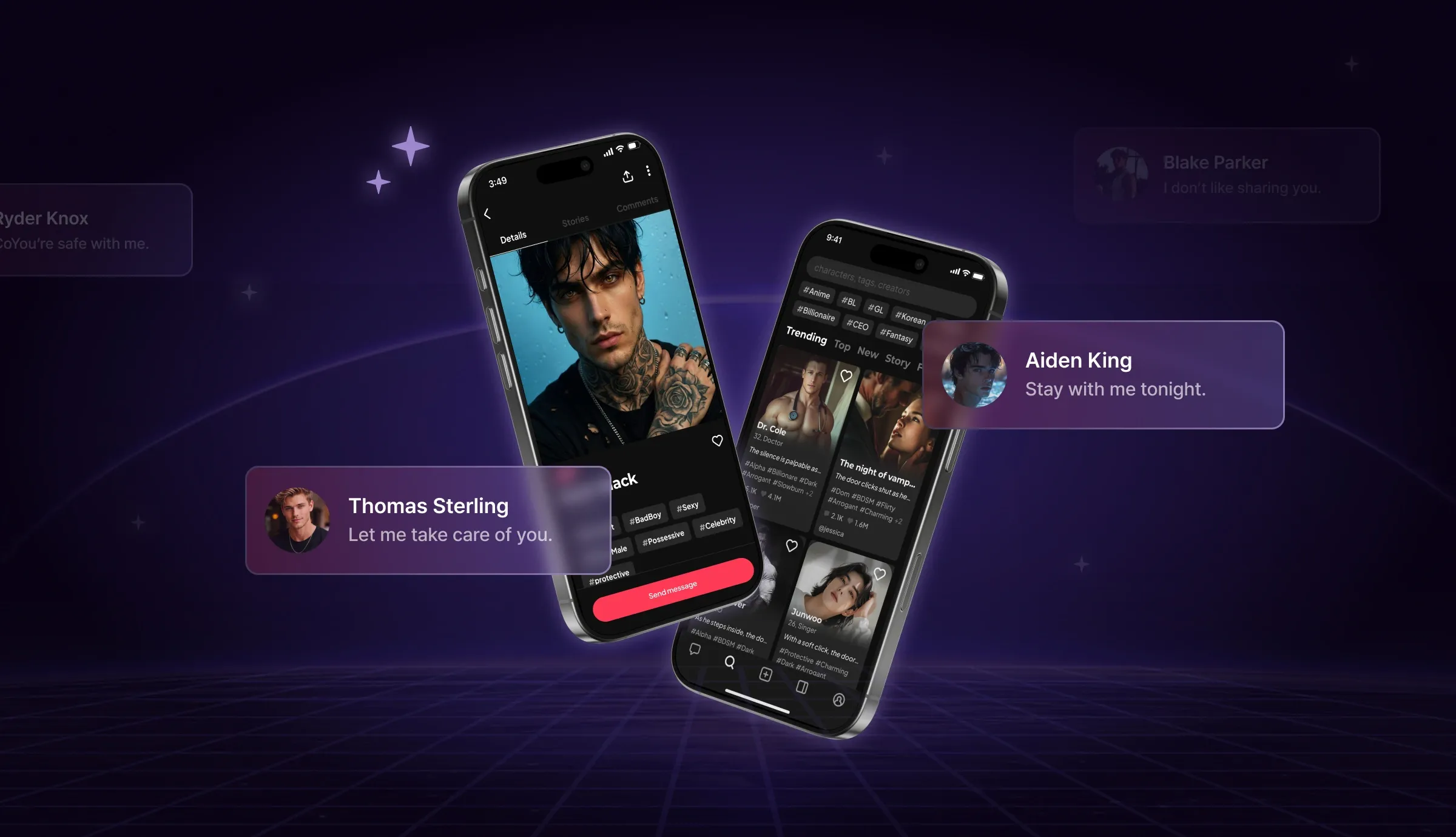
Searching for “AI Roleplay App With Good Memory” on Android? Here’s What to Know
A lot of people add “Android” to this search specifically, and it’s not random. On Android, apps get minimized, backgrounded, or killed by the OS constantly. If an AI roleplay app depends on keeping one active session alive to maintain context, it’s going to break the moment you check your notifications.
This is why the Android experience with memory-heavy AI apps tends to be worse than desktop (not always because of the app itself, but because of how mobile operating systems manage background sessions).
The apps that handle Android memory well are the ones that don’t rely on live-session continuity at all. Instead, they persist relational state independently. So, it doesn’t matter whether you had the app open for 30 seconds or 30 days. When you come back, the relationship is still there.
That’s the standard worth looking for. Not “does it remember within one session,” but “does it still know me after I closed it and opened three other apps.”
What dotdotdot Does Differently
dotdotdot isn’t a general-purpose chatbot that got roleplay features bolted on. dotdotdot is an AI roleplay app built specifically for long-form romantic progression, and that means memory and relational continuity are core to how it works.
The difference shows up in practice:
Nicknames persist. What your character called you in session one is still what they call you in session ten.
Emotional shifts carry weight. If you resolved a conflict, that resolution is part of the relationship going forward.
The tone stays stable. The character doesn’t drift from who they are just because the conversation got longer or more emotionally complex.
Progression is real. The relationship actually evolves. You’re not cycling through the same emotional beats every time you open the app.
The difference between this and most other apps is the difference between “remembering what was said” and “maintaining a relationship.” One is a technical feature. The other is what makes roleplay feel worth investing in.

Who dotdotdot Is Actually Built For
dotdotdot is a strong fit if you:
Care about long-term romantic progression, not just one-off scenes.
Have been burned by story resets on other apps and don’t want to start from zero again.
Want a relationship that develops, not one that resets to “hello, nice to meet you” every time you open the app.
Value character consistency as much as writing quality.
Are on Android and tired of losing context the second you switch tabs.
It’s not for people who want a new AI companion every session or prefer novelty over continuity. dotdotdot is specifically for people building something, and for people who want the app to actually remember what they’ve built.
Your story shouldn’t have to restart every time you open an app.
dotdotdot is built for relationships that actually go somewhere: across sessions, across weeks, across the whole arc you’re building.
Frequently Asked Questions About AI Roleplay Memory
What is the best AI roleplay app with good memory?
The best AI roleplay app with good memory is one that maintains continuity across sessions, not just within a single conversation. That means stable personality traits, cross-session relationship history, and emotional progression that actually carries forward. dotdotdot is built specifically around this kind of long-term relational continuity.
Why does my AI roleplay app keep forgetting things?
Most AI models work within a limited context window, meaning they can only actively see a certain amount of conversation at once. As chats grow longer, older details get compressed or cut off. The app might technically store old conversations, but if that history isn’t actively integrated into how the AI responds, it effectively forgets. Apps built around relational continuity handle this much better.
What is the difference between short-term and long-term AI memory?
Short-term memory applies within a single conversation. The AI tracks what’s happened in the current session. Long-term memory means important relational context, emotional milestones, and character dynamics persist across sessions, even after you close and reopen the app. Most apps handle short-term memory decently; long-term memory is where the real differences show up.
Does dotdotdot remember past conversations?
Yes. dotdotdot is designed to maintain relational continuity across sessions rather than treating each interaction as isolated. Relationship history, character dynamics, and emotional progression carry forward.
Does memory quality differ between iOS and Android?
Android’s OS behavior (backgrounding and killing apps) can disrupt platforms that rely on keeping an active session alive to maintain context. dotdotdot is built for cross-session persistence, so memory doesn’t depend on the app staying continuously open.
Is dotdotdot available on Android?
Yes. dotdotdot is available on both Android and iOS and maintains cross-session continuity on both platforms.
Why do some AI roleplay apps write well but still forget?
Writing quality and memory are actually separate capabilities. An app can generate emotionally resonant prose and still drop relational context after a few sessions. Good writing comes from the language model; good memory comes from how the app is structured around persistence and relational tracking. You need both for a satisfying long-term experience.

The story you’ve been building deserves to keep going.
dotdotdot remembers. Download and start your first chapter today.