
Looking for an App Like Character AI? Here’s What Actually Matters When You Switch
So you’re done. Or at least done enough to start looking around.
Maybe the characters started feeling off. Maybe the filters got in the way one too many times. Maybe you built something over weeks of sessions and then watched it slowly fall apart as the memory dropped and the personality drifted. Whatever pushed you to open a new tab and type “app like Character AI,” you’re not alone.
This is not a ranked list of apps with feature comparison tables. There are plenty of those. This is about helping you figure out what you actually want from a new platform, so you stop switching every few weeks and find something that actually sticks.
dotdotdot is built for the part most apps skip: the long game. Download and see what that feels like… dotdotdot is a private conversation space where context.
Table of Contents
Why People Start Looking for Alternatives (And What They’re Actually Describing)
The complaints that show up across subreddits, Discord servers, and app store reviews are consistent enough that they have started to sound like a shared language. Users describe sessions that felt like starting over every single time. They mention filters that killed momentum in the middle of a scene they had been building for days.
The specific frustrations break down into a few categories:
The filters. Content restrictions that interrupt scenes unexpectedly, redirect emotional momentum, or flatten characters into something safer and blander than what was set up. This is the most common complaint by volume, and it spans everything from mature themes to just wanting a villain to act like a villain.
The memory. Characters that forget names, context, established dynamics, and emotional history, either within a long session or the moment you close and reopen the app. Users describe investing real time into a relationship or story arc, only to have it reset on them without warning.
The drift. A subtler problem than memory, but just as damaging. This is when the character technically remembers things but starts responding like a different version of themselves. The voice softens. The personality flattens. The specific edge that made the character interesting gets averaged away over time.
The stability. Server outages, slow response times, features changing without notice, and the general feeling that the platform is optimizing for something other than what made you stay in the first place.
If any of those descriptions landed, you already know what you are looking for. The next question is which of those things matters most to you, because different platforms solve different problems.
The Real Question: What Kind of Experience Do You Actually Want?
Before looking at any specific app, it helps to be honest about what you are chasing. The people who switch platforms every few weeks usually have not answered this question clearly yet.
There are roughly three types of AI roleplay experience, and they require very different things from a platform:
Exploration and variety. You want a big library of characters. You want to hop between different scenarios, different personalities, different genres. You do not necessarily need any single relationship to last forever. You want breadth and you want it accessible quickly.
Story-driven roleplay. You want to build something. A narrative with weight, tension, characters that feel like they have real motivations. You care about consistency, pacing, and the ability to push into emotionally complex territory without the AI flattening it out. This one requires strong character stability and good writing quality above everything else.
Relationship continuity. You want one dynamic, or a small number of them, that actually builds over time. The milestone moments, the emotional shifts, the specific way the character responds to you specifically. You care about the relationship having memory, depth, and progression. This is the experience that is hardest to find because it requires the platform to be built around continuity rather than just chat.
Most people who describe themselves as looking for “an app like Character AI but better” are actually in the second or third category. They want the familiar format but with something more durable underneath it.

What to Actually Look For When Evaluating a New Platform
When you are testing a new app, most people make the same mistake: they evaluate it based on how the first session feels. The first session almost always feels good. The question is whether it holds up.
Here is a more useful framework:
Does the character stay who they are over time?
Set up a character with a specific personality, something with real edges, not just “kind and warm.” Then push the conversation past 40 or 50 messages. Introduce tension. Come back the next day. Does the character still feel like the same person?
If yes, that is a platform with genuine character stability built in. If the voice softens, the personality drifts toward agreeable, or the character starts feeling generic by the end of the session, you are going to hit the same wall you hit before.
Does it remember across sessions, not just within one?
Closing an app and coming back should not feel like meeting a stranger. Drop a specific detail in your first session, something small and particular. Come back 24 hours later without recapping. If the platform remembers it and uses it naturally, the memory system is real. If you have to reintroduce yourself, you are looking at a glorified short-term chatbot with no long-term architecture underneath.
Can you actually shape the experience?
Some platforms give you a character and expect you to just react to it. Others let you define the dynamic, set the tone, establish the relationship parameters, and steer the direction of the story. The second type leads to experiences that feel personal. The first type leads to experiences that feel like they could have happened to anyone.
What does it do well that your last app did not?
This sounds obvious but most people skip it. If your biggest frustration was memory, evaluate specifically for memory. If it was character drift, test specifically for character stability. If it was content restrictions, look for platforms with a different approach to moderation. Do not let a slick interface or an exciting first session distract from the actual problem you came here to solve.
The Types of Apps You Will Encounter
The market for AI character apps has split into a few distinct categories, and knowing which category you are looking at saves a lot of time:
Community-first platforms are built around large libraries of user-created characters. Variety is the strength. Depth and continuity tend to be the trade-off. These are great for exploration and browsing but often frustrating if you want to build something lasting with one character.
Companion-focused apps are built around a single relationship or a small number of them. The focus is on emotional continuity, long-term memory, and the feeling of a relationship that develops over time. These tend to sacrifice variety for depth.
Creative writing tools treat AI roleplay as collaborative fiction. The emphasis is on narrative craft, world-building, and storytelling structure. These are built for writers and people who care about the story itself as much as the character.
Uncensored or open platforms prioritize creative freedom and minimal content restrictions. These vary widely in quality and many require technical setup. The trade-off is usually between freedom and stability.
Local or self-hosted tools let you run AI models on your own hardware, which gives you maximum privacy and control at the cost of significant setup complexity. These are increasingly popular with users who are concerned about where their conversations go.
What Makes dotdotdot Different
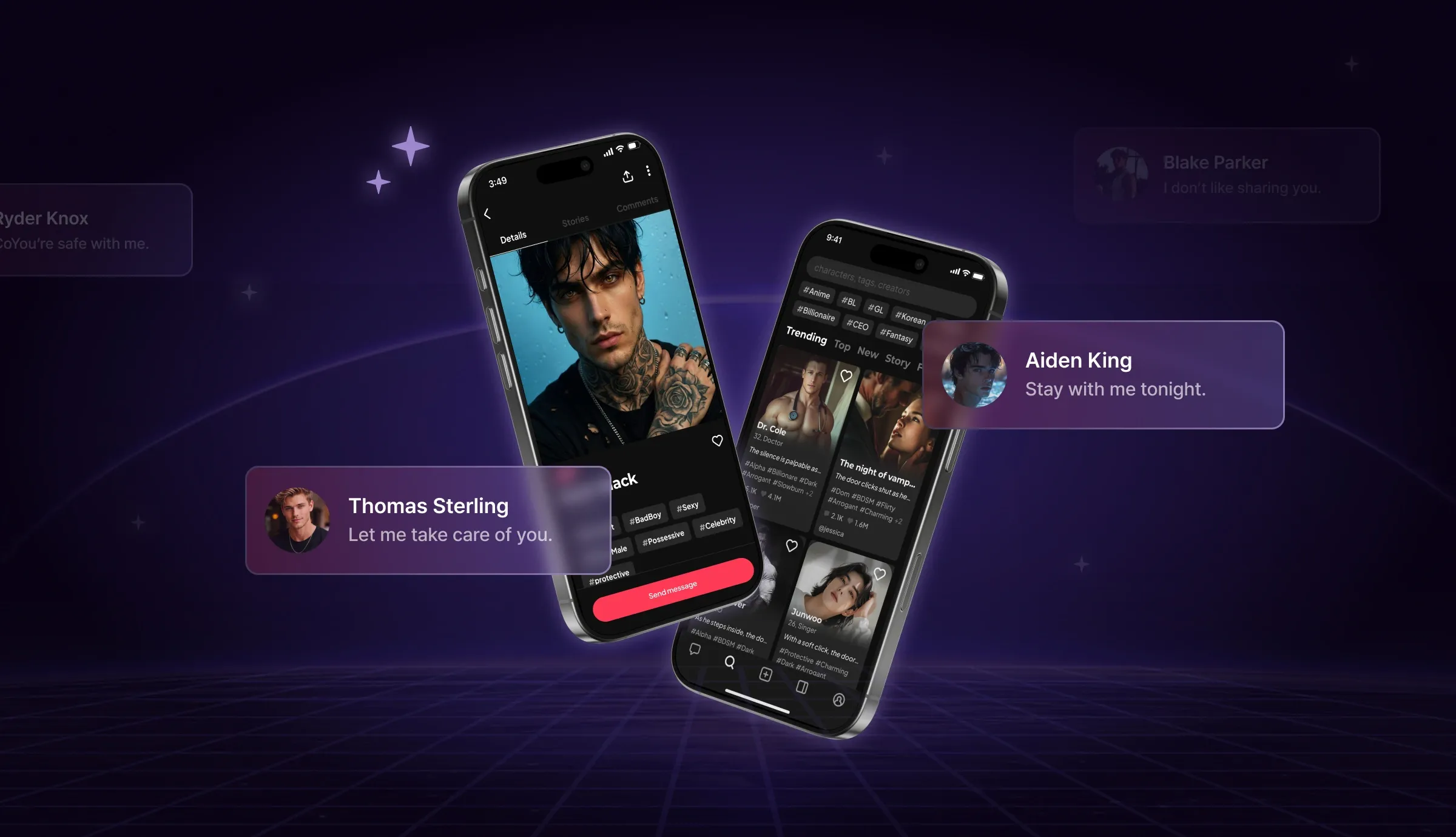
dotdotdot offers a library of over 20,000 AI characters and lets you create your own.
dotdotdot is also built for AI roleplay that goes somewhere. Specifically, long-form romantic progression where the relationship develops over multiple sessions and the character actually holds their personality across all of them.
If the frustration that brought you here was about relationships that reset, characters that drift, and sessions that feel disconnected from what came before, dotdotdot is built to solve exactly that.
What that looks like in practice:
The character stays themselves. Not just in session one. Not just when the conversation is short. Across extended scenes, across emotional complexity, across days of sessions. The personality does not flatten because the conversation got long.
The relationship builds. Milestones carry forward. Emotional shifts stick. What happened in your last session is part of how the character engages with you in the next one. The arc is real, not simulated.
Cross-session memory works the way it should. You should not have to recap your own story to the character you have been talking to for two weeks. dotdotdot is built around relational continuity, not just message recall.
It works on both iOS and Android. Including cross-session persistence on mobile, where backgrounding and OS behavior kills context on most other apps.
dotdotdot is the right fit if you are done with apps where the dynamic resets and you are looking for something that actually holds what you build.

A Quick Test Before You Commit to Anything New
Whatever app you end up trying, run this before you invest real time in it. It takes about an hour across two sessions and will tell you what you need to know.
Session one: Set up a character with a personality that has some real specificity to it. Not generic. Give them something particular: a speech pattern, a way of responding to tension, a specific emotional temperature. Build a scene. Let it get long. Note whether the voice stays consistent or starts drifting toward generic by the end.
The gap: Close the app. Wait at least a day.
Session two: Come back without re-explaining anything. Start a new message as if continuing naturally. Check whether the character knows you, remembers the dynamic, and picks up the emotional register of where you left off. Or whether it greets you like a first-time user.
If it passes both, you have found something worth building on. If it fails either one, you already know what is going to happen at week three.
The relationship you built deserves to still exist tomorrow.
dotdotdot is built for continuity, not one-off scenes. Download and start something that actually goes somewhere.
Frequently Asked Questions About Finding an App Like Character AI
What should I look for in an app like Character AI?
The most important things are cross-session memory, character consistency over long conversations, and the ability to shape the experience rather than just react to it. A great first session is easy to find. A platform that holds up after two weeks of daily use is much rarer.
Why do so many AI character apps feel the same after a while?
Most AI models are trained to produce agreeable, conflict-averse responses. Over time, the model pulls toward that default regardless of how the character was originally set up. This is called character drift, and it happens on almost every platform that does not actively build character reinforcement into its architecture.
Is there an app like Character AI with better memory?
Yes, though it varies a lot by platform. The distinction to look for is cross-session memory, which is whether the app remembers you between separate sessions, not just within one conversation. Many apps handle within-session memory fine. Far fewer maintain a real relationship history across days or weeks.
What is the difference between a companion app and a character roleplay community?
A character roleplay community is built around a large library of different characters you can interact with, prioritizing variety and discovery. A companion app is built around a single relationship or a small set of them, prioritizing depth, memory, and long-term continuity. They solve different things. Most people who want real relationship progression are better served by a companion-focused platform.
Is dotdotdot an alternative to Character AI?
dotdotdot is a different kind of app entirely. It is built specifically for long-form romantic AI roleplay with real cross-session continuity and character consistency. If what you want is a large library of user-created characters to browse, dotdotdot is not that. If what you want is a relationship that actually builds and a character that holds their personality over time, it is built exactly for that.
Does dotdotdot work on Android?
Yes. dotdotdot is available on both iOS and Android and maintains cross-session continuity on both platforms, including when the app is backgrounded or closed between sessions.
Done restarting from zero every time you open a new app?
dotdotdot is built for the long game. Download and start building something that actually lasts.