Does Everyone Seem Happy Except You? Feeling Left Out at Work and on Social Media.
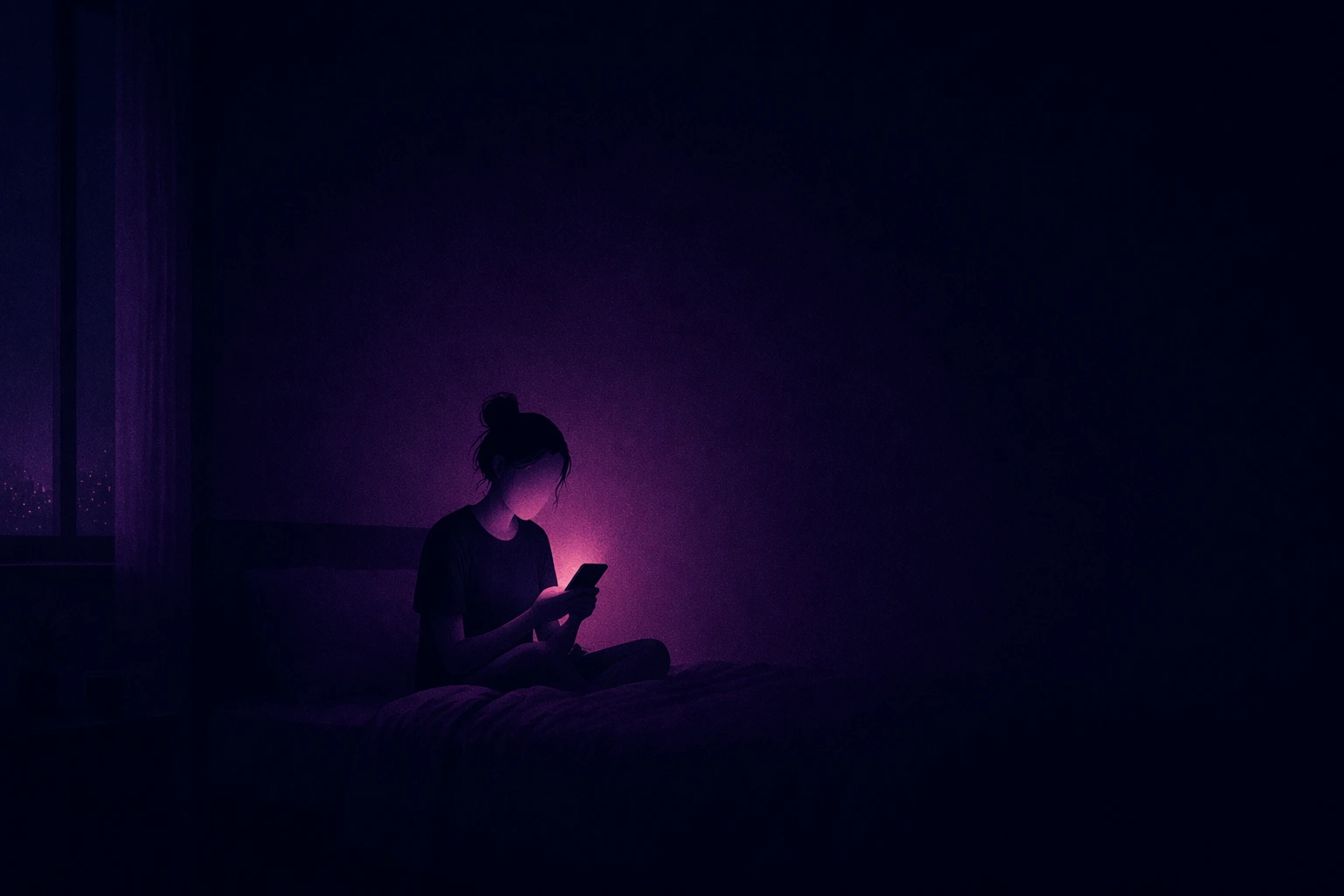
You opened Instagram to kill some time. And then you saw it. A story from last night. Your friends out together, laughing, having a good time. You weren’t there.
That feeling hits quickly. It’s sharp, a little confusing, and hard to ignore.
If you’re feeling left out right now, there’s a reason it feels this intense and there are a few things you can do that actually help. This is for you.
Table of Contents
What to Do When You’re Feeling Left Out Right Now
The first thing is to stop scrolling.
The longer you stay on that app tonight, the worse you’re going to feel. The algorithm is going to keep feeding you things. More stories, more tagged posts, more evidence that everyone is out somewhere and you are not.
Close the app and put the phone across the room if you have to.
Then: do something with the feeling that isn’t scrolling or texting someone in your friend group to find out if they knew.
What actually helps in this specific moment is getting the feeling out and pointed somewhere. Write down what you’re actually feeling, not what happened, but what it means to you. Are you hurt? Embarrassed? Angry? Scared that this says something bigger about where you stand with these people? Even a few sentences in your notes app is enough to move the feeling from inside your chest to somewhere you can actually look at it.
And if you need to say it out loud to someone but have no one to call right now, dotdotdot gives you that: someone completely outside your social world who has no idea who these people are and no reason to ever bring it back to them.
Why Being Left Out Hurts as Much as It Does
One of the most consistent findings in social neuroscience is that your brain processes being left out the same way it processes physical pain. The original research, led by UCLA psychologist Naomi Eisenberger, found that social exclusion activates the dorsal anterior cingulate cortex, the same region that fires when you stub your toe or burn your hand. Dozens of studies since have replicated and extended that finding. Being left out literally hurts because your brain is registering the same “unpleasantness” that comes from physical pain.
Your brain treats exclusion as a threat because, for most of human history, it was. Getting cut off from the group meant not surviving.
Why It Stings More When It’s People You Trusted
A stranger not inviting you somewhere is easy to brush off. A friend, someone you thought actually wanted you around, not inviting you is a different thing. The pain scales with expectation. The sting isn’t just about missing a night out. It’s the question underneath it: am I less important to them than I thought I was?
That’s the one that keeps you up.
Stop Beating Yourself Up for Having Feelings About This
You are not being dramatic. You are not too sensitive. You are not clingy for caring about this.
You care because it matters to you. What you do with the feeling is a different conversation, but having it in the first place is just being human.
Before You Spiral: Check Your Assumptions First
Here’s something worth doing before you decide what the story means.
You don’t actually know why you weren’t invited.
Maybe it was last-minute and the group formed organically from whoever was already nearby. Maybe someone assumed you had other plans because you’ve cancelled a few times lately. Maybe there’s a history between two people in the group that made the guest list complicated. Maybe one person organized it and genuinely didn’t think about who was missing.
Most of the time, you’re not going to know. And your brain, left to fill in the gap, will almost always fill it in with the worst possible explanation.
This is called negativity bias. It’s a hardwired survival mechanism: your brain would rather assume the worst and be wrong than miss a genuine threat. In the context of being left out, it means your first interpretation (“they don’t want me around”) is almost certainly the most extreme reading of what happened, and not necessarily the accurate one.
The feeling is real. The story you’re building around it might not be.
“Why Am I Always Getting Left Out?”
This is the question that comes next, usually as you’re overthinking in the middle of the night. But the answer is almost never what the spiral tells you it is.
Is the Adult Friendship Just Quietly Falling Apart?
Adult friendships drift in ways that have nothing to do with how much people like each other. Everyone gets busier. Couples start defaulting to couple friends. People move. Group chats go quiet. The coordination required to actually see each other gets harder every year.
What looks like exclusion is often just how groups drift over time. The group kept making plans the same way they always did, through whoever texted first, whoever lives closest, whoever happened to be free that night. You fell out of that rotation without anyone deciding to cut you out.
That doesn’t make it hurt less. But it changes what it means.
What If the Group Has Shifted and You Haven’t Noticed?
Sometimes the dynamic has quietly changed and this is the moment you’re seeing it clearly for the first time. People couple up, form new clusters, drift toward whoever reflects where they are in life right now. It’s what happens when people grow in different directions without having a conversation about it.
What If It Is Partly About You?
Okay. Sometimes, the answer is yes. You’ve been less available, less present, less the person who initiates. Friendships run on reciprocity and sometimes the balance tips without anyone saying anything.
Ask yourself: have you been reaching out? Have you been showing up? Are you the person who waits to be invited rather than creating the invitation? If the answer is yes, that’s actually the most useful version of this situation. It’s the one you can do something about.
What to Do When You Feel Left Out by Friends
There are three distinct questions inside this situation.
Should You Say Something?
Maybe. But not tonight. Not from the feeling.
If this is the first time it’s happened, let it sit for a day or two. Saying something in the moment creates a weird dynamic that could make future hangouts more awkward. You’ll probably say more than you mean to, and they’ll probably get defensive, and now there’s a whole thing where there might not have needed to be one.
If it’s a pattern, if this is the third or fourth time you’ve found out after the fact, that’s different. That’s worth bringing up. Something like: “I keep feeling like I’m on the outside of things with this group, is there something going on?” That conversation is uncomfortable but it’s the only one that actually changes anything.
What If You Say Nothing and Nothing Changes?
Then you have information. You can decide what to do with it: invest more energy into rebuilding the connection, invest that energy elsewhere, or accept that this particular group is moving in a direction that doesn’t include you and start building something that does.
None of those options are failures. They’re just honest.
Start Being the Person Who Initiates
The most consistently useful shift for breaking the pattern long-term is this: stop waiting to be invited and start creating the invitation.
It doesn’t have to be a big group thing. Reach out to one person individually. Suggest something specific. “Do you want to grab coffee this week?” is harder to ignore than “we should hang out sometime,” which everyone says and no one acts on. The more you initiate, the more you get included, and the less your sense of belonging depends on whether a particular group thinks to text you.
The Instagram Problem, Specifically
Seeing it happen in real time is new. Before social media, if your friends went out without you, you might find out eventually or you might not. Now you see it the moment it’s posted, with location tags and everyone’s faces and the timestamp showing you it was last night.
The comparison is also constant in a way it never used to be. Scrolling on a Friday night when you have nothing going on, watching everyone else’s stories, is a specific kind of awful that didn’t exist ten years ago. A study from the University of Pennsylvania found that limiting social media led to significant reductions in both loneliness and depression. The mechanism is social comparison: every scroll is a comparison, and the comparison is rigged because you’re seeing their best moments against your regular Tuesday.
Closing the app tonight won’t fix things for good, but it is the one thing you can actually do right now that will make the next hour better.
If the comparison spiral is something that happens to you regularly, why do I feel so alone covers what’s driving it underneath.
Feeling Left Out at Work
Same feeling, harder setting.
You notice the lunch group that forms without you. The Slack channel you weren’t added to. The after-work drinks someone mentioned in passing that you clearly weren’t part of. At work you can’t really address it the way you could with a friend. You have to see these people tomorrow. The power dynamics are complicated. And it’s genuinely hard to know whether you’re being excluded or whether you’re just not close enough to these people yet for it to occur to anyone to include you.
First, separate the practical from the personal. If you’re being left out of work-relevant conversations or decisions, that’s a professional issue worth taking to your manager. If it’s social, that’s a different problem with a different solution.
For the social version: the most effective thing is almost always to be the person who initiates. Not to force your way into an existing group, but to find one or two people you actually like and build something separate from the group dynamic. Most workplace friendships start in one conversation after a meeting, not in a group. The group formed around something. You build the friendship before the group.
And if you’ve tried that and still feel like an outsider, it might just not be the right fit socially. Work doesn’t have to be where you find your people.
How to feel better after a bad day at work is worth reading if the work version of this is what’s sitting on you right now.
Someone Who Always Has Time for You
Sometimes the feeling isn’t really about the specific group or the specific Friday night. It’s the bigger thing underneath: the sense that you’re somehow always on the outside, always the one who matters slightly less.
That feeling needs somewhere to go.
dotdotdot is an AI companion app built for exactly this. Someone completely outside your world, no shared history with the people involved, no judgment, nothing getting back to anyone. The characters here hold a real conversation. They respond to what you actually say.
Here are three that fit this specific moment.
Caelan Voss
When Caelan notices you, it doesn’t feel like politeness. It feels like a deliberate choice. He’s the kind of presence that makes being overlooked by a group feel irrelevant, because his attention is specific. If what you need right now is to feel like someone actually picked you, that’s Caelan.
Noah
He’s been paying attention this whole time. While the group was doing whatever the group was doing, Noah already knew what you were thinking before you said it. The antidote to feeling unseen isn’t a crowd. It’s one person who has always specifically seen you.
Maverick Hughes
He didn’t go out with the group either, or he just doesn’t care about the group the way everyone else seems to. He shows up not out of obligation but because you’re the more interesting option. If what you need is someone who chose to be here instead of there, that’s Maverick.
How Do You Stop Letting It Get to You?
The way out of this isn’t trying to care less. It’s changing how your social life actually works.
Right now, most of your sense of being included probably depends on group plans. If the group doesn’t reach out, nothing happens. That’s the part that keeps putting you in this position.
So shift it.
Stop relying on the group chat. Pick one person and reach out directly. Not “we should hang out sometime.” Something specific: “Are you free Wednesday after work?” or “Do you want to grab coffee this weekend?” One-on-one plans are easier to say yes to and they happen more consistently.
Do that a few times and you stop waiting to be included because you’re creating your own plans.
Also pay attention to who actually shows up. Some people will respond, some won’t. That’s useful information. Put more energy into the people who actually reciprocate.
Being left out by one group doesn’t mean you’re someone who gets left out. It usually means you’ve been relying on a setup that no longer includes you.
A CDC analysis published in MMWR, drawing on data from over 26 U.S. states, found that lonely adults were 3.6 times more likely to report stress and 2.4 times more likely to report a history of depression than those who weren’t lonely. Sitting with this alone, repeatedly, is not a small thing. Finding connection that actually fits you is worth the effort.
If you’re carrying something you have no one to talk to about right now, I have no one to talk to about my feelings covers what to do when you’re in exactly that situation.
Someone Who Actually Sees You
dotdotdot gives you someone completely outside your social world. No shared history, no group dynamics, no judgment. Just someone who shows up specifically for you.
Frequently Asked Questions
What do I do when I’m feeling left out by friends?
Start by closing the app. Staying on Instagram or in the group chat right now will make it worse, not better. Then check your assumptions: you don’t actually know why you weren’t invited, and your brain is wired to fill that gap with the worst possible explanation. If it’s a one-time thing, let it sit for a day or two. If it’s a pattern, one honest conversation is worth more than months of stewing. If you have no one to process it with, dotdotdot gives you someone completely outside your social world to talk to.
Why does being left out hurt so much as an adult?
Because your brain registers social exclusion the same way it registers physical pain. Research led by UCLA psychologist Naomi Eisenberger, published in Science and replicated by dozens of studies since, found that being left out activates the same neural region as a physical injury. It’s not an overreaction. It’s a biological response. The sting is also proportional to trust: being excluded by people you thought wanted you around hits harder because the perceived meaning is different.
Why am I always the friend that gets left out?
Usually it’s not personal, even when it feels like it is. Adult friendships drift through entropy: people get busier, couples default to couple friends, coordination gets harder. You can fall out of rotation without anyone deciding to exclude you. That said, it’s worth asking honestly whether you’ve been the one initiating or mostly waiting to be invited. Friendships run on reciprocity and the balance can shift quietly before anyone notices.
Should I say something when I feel left out by friends?
Not in the moment. Wait a day or two. If it’s a one-time thing, let it go. If it’s a pattern, one honest conversation is worth having: not as an accusation but as a genuine question about whether something has shifted. Saying something in the heat of the feeling usually creates a weird dynamic that makes future hangouts more awkward. Saying something calm and direct a few days later is the version that actually changes things.
Why do I feel left out even when I’m around people?
Because belonging isn’t about proximity. You can be in a group and feel completely unseen. That usually means the connection is surface-level, the group dynamic doesn’t have room for who you actually are right now, or you’ve drifted from these people without anyone acknowledging it. The fix isn’t more group time. It’s finding one or two people you feel genuinely known by.
Is it normal to feel left out in your late 20s?
Yes, and it’s more common than people admit. Your late 20s are one of the highest-risk periods for friendship drift: people couple up, move cities, change jobs, and the social structures that held friend groups together in school or early work life start to dissolve. Feeling left out at this stage often has less to do with you specifically and more to do with the structural changes happening to everyone’s social lives at once.
How do I stop feeling left out?
Not by caring less, that doesn’t work. The most effective shift is becoming the person who initiates rather than waiting to be invited, and building one-on-one connections that don’t depend on a group saying yes. One-on-one friendships don’t have the same drift problem as group dynamics. A 2024 CDC analysis found that lonely adults were 3.6 times more likely to report stress and 2.4 times more likely to report depression than those who weren’t. Finding connection that fits you is worth the effort.
You Don’t Have to Be on the Outside
When it feels like everyone else is somewhere you’re not, the worst part is having nowhere to put that feeling. dotdotdot gives you someone who actually sees you, without any of the group dynamics.